
Whenever you read an article, you must have noticed clickable links attached to words, images, and infographics that redirect you to another webpage. These links are known as backlinks.
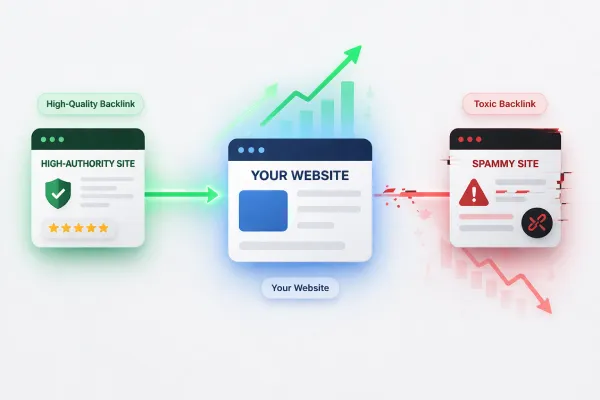
While backlinks are one of Google’s most important ranking signals, their impact depends entirely on where they come from. Not every backlink works in your favor.
Links from trusted, relevant websites help you rank higher on Google. But links from spammy or low-quality websites can actually hurt your site and you have no control over who decides to link to you.
In some cases, such links are deliberately created to downgrade your rankings. This practice is commonly referred to as a negative SEO attack.
As a result, such links harm your SEO performance and may trigger manual actions or algorithmic penalties from Google, causing your site’s rankings to drop and reducing organic traffic to almost nothing.
That’s exactly the problem the Disavow tool is built to solve. As Google puts it:
If you have a manual action against your site for unnatural links to your site, or if you think you’re about to get such a manual action, you can disavow those links.
In this guide, you’ll learn when to use the Disavow tool and when it’s better to leave it alone. But, before learning about this let’s first understand what is ‘Disavow Link’ in SEO.
What is ‘Disavow Link’ in SEO?
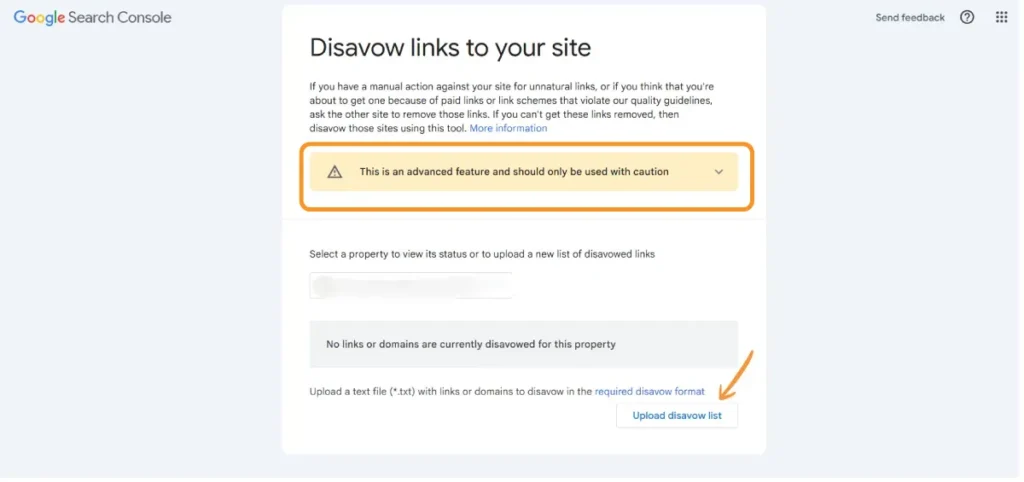
Disavowing a link simply means asking Google to ignore specific backlinks when evaluating your site. This is executed by uploading a structured .txt file containing a curated list of targeted URLs and domains to Google’s Disavow Links tool.
By ‘specific links,’ I’m referring to unnatural backlinks originating from irrelevant or low-quality sources, toxic links that violate Google’s Webmaster Guidelines, and spammy links that may have been deliberately placed to undermine your site’s search performance.
It is worth noting that the Google Disavow Links Tool is a powerful feature. It is not intended for routine use or for removing every low-quality link you encounter.
At this point, you might be wondering when exactly this tool should be used. I will answer this but first we will learn why Google introduced the disavow link tool in the first place.
Why did Google Introduce the “Disavow Link Tool”?
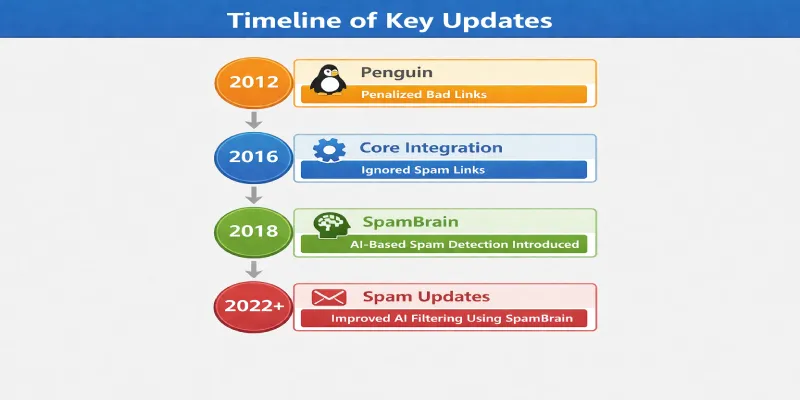
Google has consistently updated its spam policies over time, but the issue of unnatural and manipulative backlinks was formally addressed for the first time during the Google Penguin Update in April 2012.
It was a major action against ‘black hat web spam’ or ‘web spam’ by Google targeting websites that in pursuit of higher rankings or traffic use unethical manipulative link-building practices like paid links, excessive Link Exchanges, automated Link Building and private blog networks etc. Google calls these practices ‘Link Schemes.’
So Google started taking manual action for unnatural links against websites that were violating spam guidelines. This created widespread panic, as many site owners had little control over harmful links pointing to their domains.
To address this, Google Disavow Link Tool was introduced, in October 2012, that enables you to disavow links to your site. As Google states in its official documentation:
If you’ve been notified of a manual spam action based on “unnatural links” pointing to your site, this tool can help you address the issue.
This tool gave webmasters more control over the backlinks pointing to their site.
When to Disavow Links?
You should consider Google Disavow link tool as a last resort, not a standard practice as Google itself said that:
The disavow tool hurts many more sites than it helps and has doubled down on not using it.
Most websites do not ever need to use this tool because over the years Google has significantly updated its Spam Detection System and Link Analysis Algorithms to ensure that spammy or irrelevant links are identified and ignored so that it does not negatively impact your site’s performance.
Moreover, the launch of ‘SpamBrain’ by Google, an AI-based spam-prevention system made the process of identifying spam links more accurate and automated.
So Google disavow link tool should only be used under the following specific situations with caution.
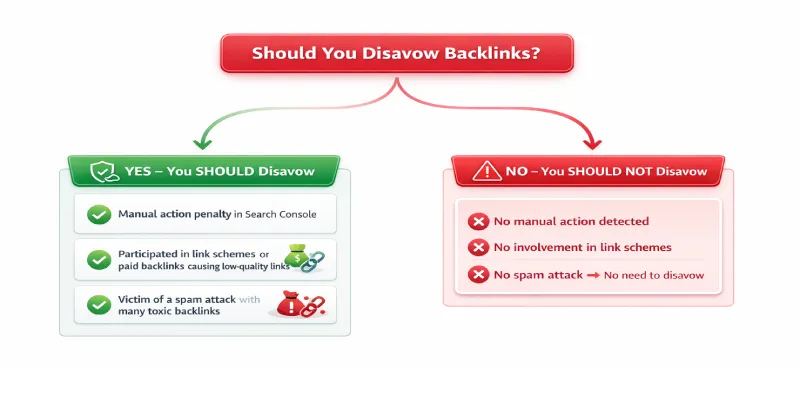
1. Received a Manual Action (Penalty)
When you have received a manual action notification in your Google Search Console for ‘ unnatural links’ it becomes essential to disavow bad backlinks as Google has explicitly identified manipulative link patterns, and disavowing bad backlinks is a required step toward recovery.
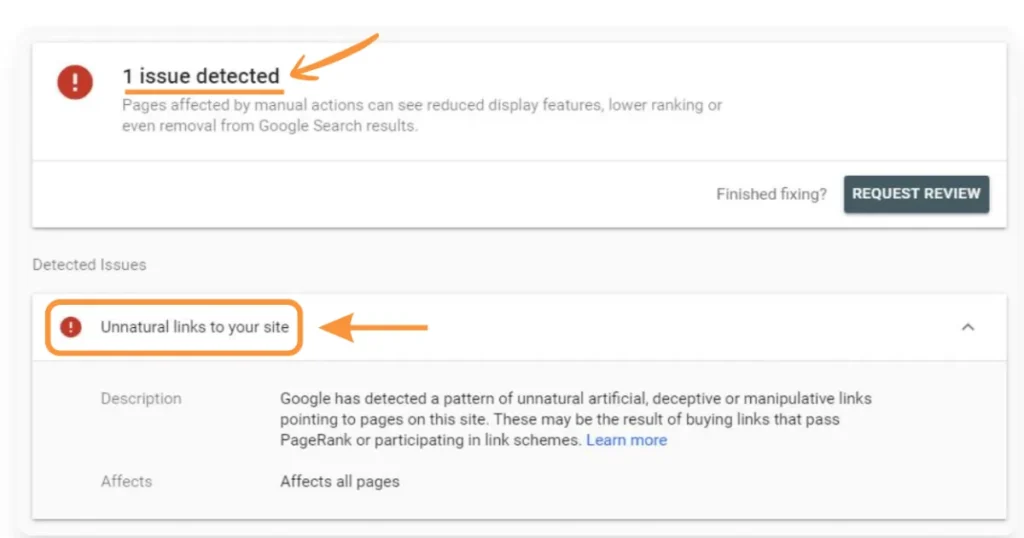
2. Considerable Amount of spammy backlinks to your site
When there are a considerable number of spammy, artificial, or low-quality links pointing to your site due to spam attacks or your website being hacked. If they cannot be removed manually and your site is at high risk of receiving manual action due to them. Disavowing them becomes inevitable.
3. Participated in link Schemes:
If you or the SEO you hired have ever participated in purchasing links or link schemes to your site that caused a large number of bad quality links pointing to your site then disavowing links can be considered as a solution.
However, before using this tool, you should first reach out to the site owners linking to your site and request them to remove those links. If even after your best efforts, you’re unable to get a few backlinks taken down, that’s a good time to use the Disavow Links tool.
Do NOT disavow backlinks if
- There are no manual actions showing in your Google search console.
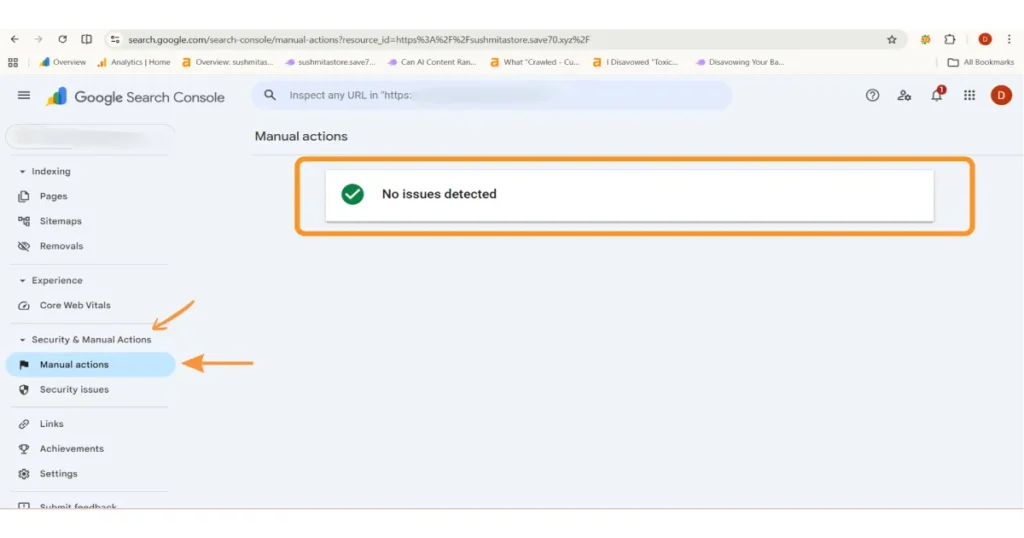
- You and your hired SEO have never participated in purchasing links and link schemes.
- There are no spam attacks against you.
It’s important to note here that, If you haven’t received a manual action, you almost certainly don’t need this tool. Don’t react to every bad-looking link, act only when multiple risk signals align and there is clear evidence of potential harm otherwise don’t disavow.
Does Disavowing Backlinks Actually Work
Google Disavow Link Tool is effective but its effectiveness is often misunderstood. The disavow tool allows website owners to submit a list of links they want Google to ignore for ranking purposes.
However, it is essential to keep in mind that this file serves as a suggestion, not a directive for Google. Google uses its own judgement to decide whether to ignore the disavowed link or not. Google’s John Mueller has confirmed this:
The disavow file is more of a hint to us than a directive.
So, submitting a disavow file does not ensure measurable changes in rankings or traffic.
Disavowing backlinks tends to be most relevant in specific cases such as when a website has engaged in link schemes or is dealing with a manual action related to unnatural links. In these situations, it can support cleanup efforts.
Moreover, Google’s algorithms are advanced enough to automatically ignore spammy or low-quality links. Indicating that Google might already be ignoring those spam and manipulative links you are worried about, if you have not received a manual action in Google Search Console.
For example, an experiment conducted by Cyrus Shepard found no measurable ranking impact after disavowing backlinks, suggesting that Google may already be discounting those links algorithmically.
Risks of Using Disavow Link Tool
The use of the Disavow Tool involves substantial risk, particularly when utilized without careful consideration. It can cause more harm to your site than potential gains, so when in doubt, don’t disavow.
You may lose high quality links to your site, if they are mistakenly included to the disavow file. This is reversible by removing the high quality links from the disavow file and reuploading it , but it is neither immediate nor risk-free. It takes time for search engines to recrawl and reprocess the affected links before any changes are reflected.
This may lead to reduction in your site’s ranking and organic traffic may also degrade. In some cases, rankings may not fully return to previous levels. That’s why it’s always recommended to use this tool with utmost precision and only when it is absolutely necessary.
Future of Disavow Tool – Will Google Remove It?
There are no official statements from Google regarding the removal of the Disavow Link Tool. However, Google’s John Mueller has indicated that it may be discontinued in the future due to advancements in spam detection systems such as SpamBrain, which are designed to identify and automatically ignore low-quality or manipulative links.
At present, the use of the disavow tool is limited to specific scenarios, particularly in cases involving manual actions related to unnatural backlinks. Therefore, it cannot be considered obsolete.
Notably, Bing already removed its disavow tool in 2023, indicating a broader industry shift toward automated spam handling.
Conclusion
To conclude, Disavow tool is not a regular SEO practice. It is recommended to be applied only when there is a manual action received for unnatural links or have participated in link schemes that cannot be resolved through manual removal.
Google’s advanced spam detection systems are largely capable of identifying and ignoring low-quality or spammy links without intervention.
Therefore, routine use of the disavow tool is neither necessary nor recommended. Use it rarely, use it carefully, and only when Google has given you a clear reason to act.
Disclaimer:
SEO practices and search engine algorithms evolve frequently. The recommendations provided are based on current Google guidelines and industry knowledge. Changes may occur without prior notice, affecting outcomes.